
Mixing & Mastering Course | London
In our students' words.
“As a songwriter/producer I relied heavily on engineers for recording and mixing if I wanted to get my tracks sounding like masters. I always wanted to do more myself but struggled to learn anything watching an engineer zip around Logic or Pro Tools at 1000 mph! Then I found Garnish School of Sound and did their Mixing and Mastering course. It was exactly what I needed, we covered everything I was unsure of in the past from using buses properly, EQ, audio compression and using specialist mastering plugins. Everything was explained and demonstrated in a way I understood. I never thought i'd ever be able get such great sounding tracks doing everything myself.”
Ben Cullum
Instructors
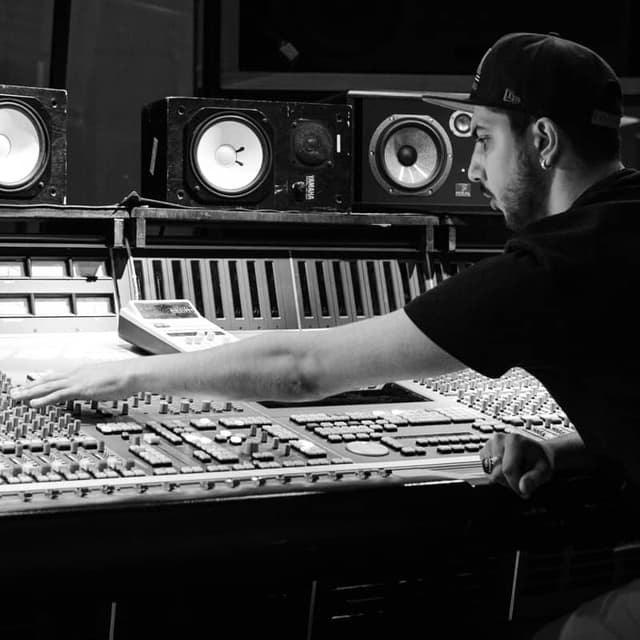
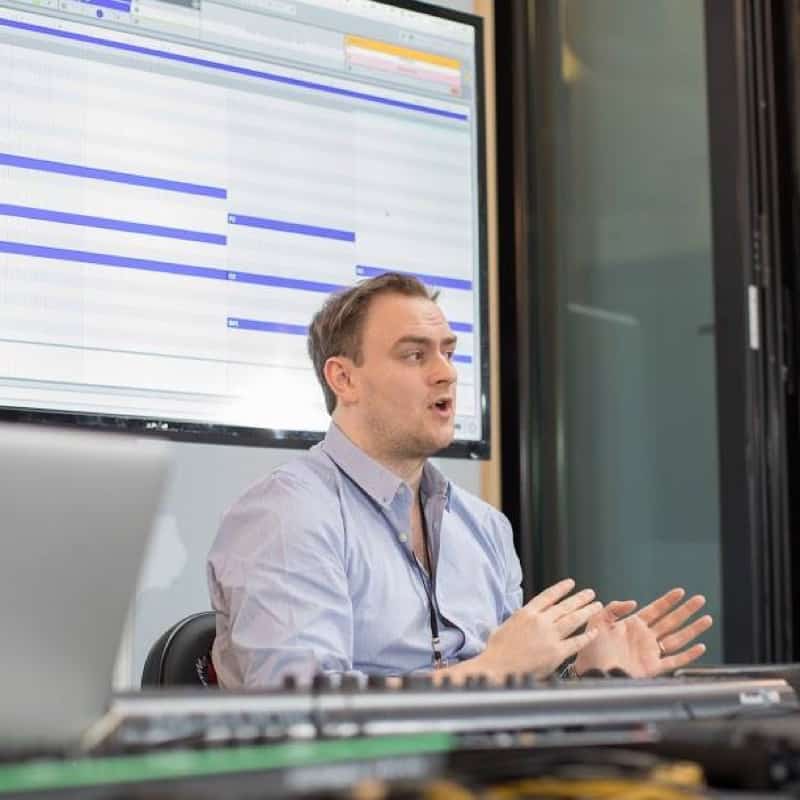
Program modules.
- →EQ
- →Studio monitor speaker design
- →The art of balancing and panning
- →Acoustics and acoustically treating your home studio
- →All about mono, stereo and 5.1 in your software DAW
- →Dynamics controller tips to achieve clarity in your mix
- →All about compression
- →In-depth with the parameters
- →Types of compression circuitry (optical, valve etc) and their digital emulations
- →Parallel dynamic processing
- →Gates and de-essers
- →Tips on how to make your records come to life with FX
- →Types of reverb and delay, where to use them
- →In-depth with all the parameters
- →Spatialisation with convolution reverbs and delays
- →Phaser, flanger, chorus, pitch shifters, harmonisers and creative FX
- →Getting separation between lead and BVs
- →Tips on automating levels (rides)
- →FX Chains for your vocal sound
- →Preparing vocals, vocal comping and tuning vocals
- →Saturation
- →Filtering and samples
- →Vocoder, Ring Modulators, Envelopers, Auto-panning, distortion and bit crushing
- →Sidechaining dynamic controllers and filters for FX
- →Getting creative with reverb and delay
- →Pitch shifters, harmonisers and creative FX
- →Active listening and critiquing of released mixes
- →Analysis and critique of your mixes
- →EQ, brick wall limiting, levels, and phase
- →Which mastering plugins to use – dos and don’ts
- →Other useful metering tools
- →Using references to get your EQ and separation. A/Bing
- →Use your own laptop, or use our iMacs free of charge.
- →Headphones, controllers and Ableton Push are available to use.
- →50% FabFilter discount available for all Garnish students.
Ready when you are.
InquireFiltering
There are many ways to access the power of filtering, but probably the easiest is to use a plug-in. Logic’s AutoFilter is a good example of Emagic’s…
Read →Reverb
When we experience a sound we are not only hearing it from the direct source, but also from the environment in which it is situated (reflections from…
Read →Modulation
We have discussed the most common modulation effects such as chorus, flanging and phasing. Now it is time to investigate other modulation effects.
Read →Acoustics: The Basics
Why room shape changes what you hear, what standing waves do to your low end, and what RT60 means for a small studio.
Read →Mixing Electronic Music
Some of you may be aware that the primary use for a gate is to reduce noise and any unwanted signal that is present in your recordings. For example you…
Read →Delay
From tape echoes to ping-pong delays: the parameters, how to match delay time to tempo, and using delay as a real mixing tool.
Read →